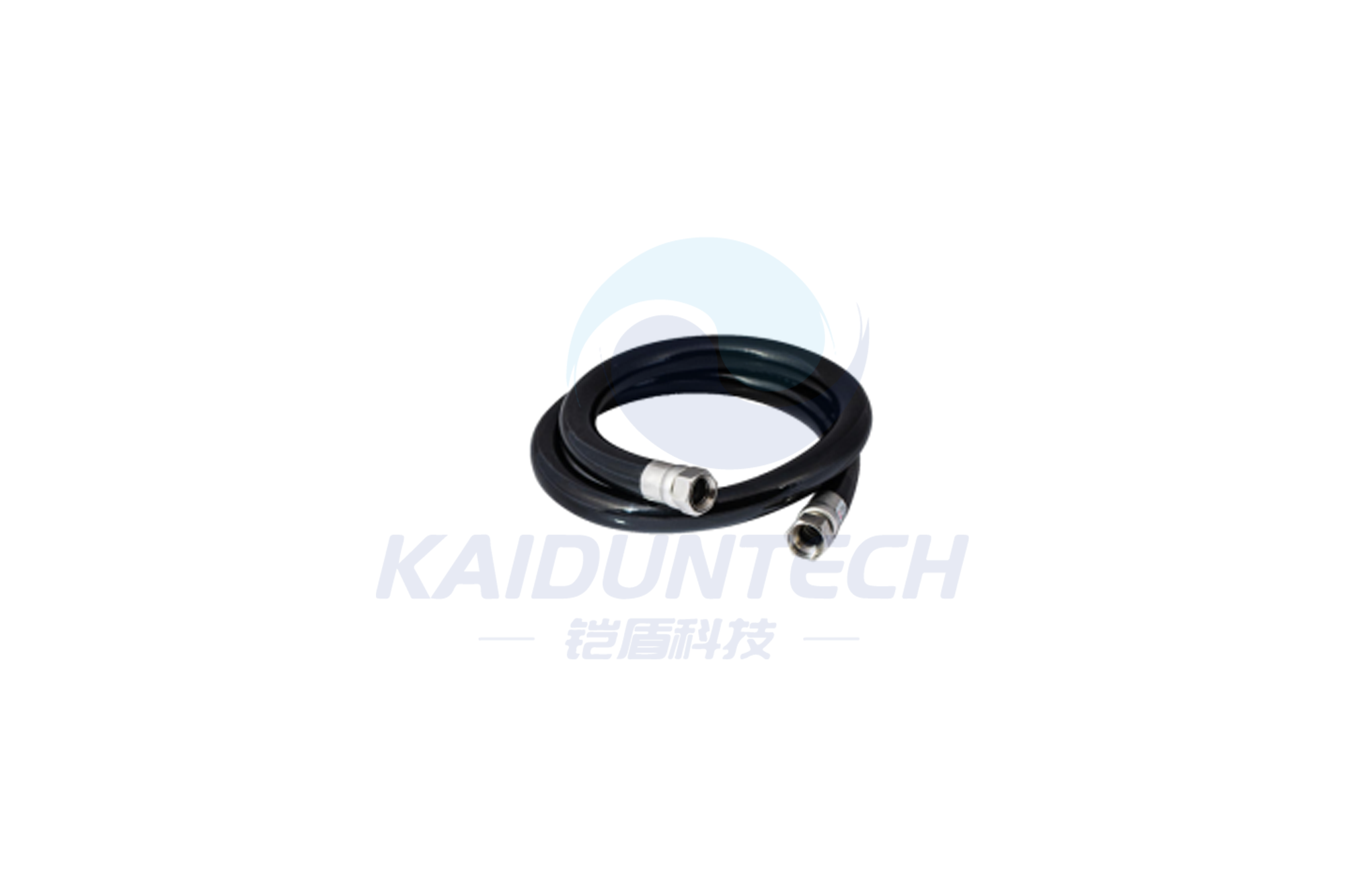
Ex‑certified explosion‑proof flexible connecting hose, stainless‑steel‑rubber composite, IP65, G1/2‑male to G3/4‑male thread, 1500 mm standard length. For gas Zone 1‑2 hazardous‑area vibration‑absorbing flexible wiring between explosion‑proof cameras and junction boxes. Ideal for refineries, offshore platforms and oil‑tanker hazardous‑zone projects.
Ex‑certified explosion‑proof flexible connecting hose, stainless‑steel‑rubber composite construction, IP65 ingress protection. Thread configuration G1/2 male to G3/4 male, standard length 1500 mm. Designed for gas Zone 1‑2 hazardous‑area installations. Absorbs vibration and accommodates bending requirements, for cable connection between explosion‑proof cameras, junction boxes and other Ex‑electrical equipment. Suited for refineries, petroleum exploitation, offshore platforms, oil tankers, chemical and pharmaceutical industrial outdoor hazardous‑zone projects.
🎯 Customer Pain Points
Hazardous‑industry and marine‑offshore wiring projects frequently face cable‑routing challenges:
Vibration‑induced stress on rigid steel‑pipe wiring: On‑site equipment, vessel‑deck and offshore‑platform units generate continuous vibration. Rigid steel conduits transfer vibration stress to equipment thread ports, risking thread fracture, seal damage and loss of explosion‑proof integrity.
Difficult bending for fixed steel‑pipe runs: Complex field layout requires angular offset and offset routing. Rigid steel pipes are hard to bend on‑site, bringing heavy cutting and modification workload.
Hazardous‑zone compliance requirement: Cable connections within gas Zone 1‑2 IIA/IIB/IIC explosive‑gas atmospheres must adopt certified explosion‑proof flexible hose. Non‑certified flexible tubing will trigger safety‑audit or vessel‑survey rejection.
Outdoor environmental adaptability: Outdoor industrial and marine locations demand weather‑resistant composite construction, resisting ambient temperature variation and outdoor moisture.
Thread‑matching requirement: Explosion‑proof cameras and junction boxes adopt mixed‑spec G‑thread ports. Mismatched thread ends cause extra adapters and on‑site re‑work.
System‑matching requirement: Complete hazardous‑area surveillance system requires certified flexible hose to mate with explosion‑proof cameras and junction boxes. Unqualified wiring accessories invalidate whole‑set equipment acceptance.
Uncertain project lead‑time: Explosion‑proof flexible connecting hose is special hazardous‑area wiring accessory. Ambiguous delivery cycle may delay surveillance‑system commissioning milestones.
KDR‑1500 addresses above‑mentioned pain‑points. Ex‑approved stainless‑steel‑rubber composite explosion‑proof flexible hose with G1/2‑male‑to‑G3/4‑male thread ends. It absorbs equipment vibration and solves difficult‑bending routing, delivering compliant cable‑connection solution for outdoor gas Zone 1‑2 hazardous‑area projects.
🏭 Typical Application Scenarios
✅ Refineries & Petroleum Exploitation Sites: Hazardous‑zone flexible cable connection for explosion‑proof cameras and junction boxes within gas Zone 1‑2, IIA/IIB/IIC explosive‑gas atmospheres. ✅ Off‑shore Oil Platforms: Vibration‑absorbing cable‑routing for outdoor hazardous‑zone surveillance equipment. ✅ Oil Tankers & Work‑Vessels: On‑board hazardous‑cargo‑zone wiring, mitigating vibration stress from vessel operation. ✅ Chemical & Pharmaceutical Plants: Outdoor classified hazardous‑area wiring for explosion‑proof electrical devices where steel‑pipe bending is difficult.
Thread ends: G1/2 external thread to G3/4 external thread. Mounts between junction boxes and explosion‑proof field equipment. Compatible with KAIDUNTECH full‑range explosion‑proof cameras and junction boxes for one‑stop hazardous‑area wiring‑solution procurement.
✨ Core Product Highlights
Authoritative Explosion‑Proof Qualification: Explosion‑proof marking ExdⅡGb / DIP A28. Complies with GB3836.1, GB3836.2, GB12476.1, GB9600 and IEC60079 standards. Applicable for gas Zone 1‑2 and IIA/IIB/IIC explosive‑gas atmospheres. Certification documents available for land‑site safety‑audit and offshore‑vessel survey submission.
Stainless‑Steel‑Rubber Composite Construction: Robust composite casing balances mechanical strength and flexible performance. IP65 ingress‑protection, suitable for outdoor deployment. Working temperature range:‑20 ℃ ~ +70 ℃.
Standard Thread‑End Configuration: G1/2 male thread to G3/4 male thread. Perfectly matches mainstream explosion‑proof camera and junction‑box port specifications, reducing demand for intermediate adapter fittings.
Vibration‑Absorbing & Bending‑Capable: Flexible structure absorbs mechanical vibration transferred from equipment or vessel hull. Solves wiring‑layout challenges where rigid steel conduits cannot be easily bent, protects cable and thread joints against mechanical stress damage.
Optimised Dimension & Weight: Standard length 1500 mm; outer diameter 28.5 mm, inner diameter 20 mm; net weight 1.15 kg. Convenient for on‑site handling and installation.
System‑Matching Wiring Accessory: Purpose‑built to pair with KAIDUNTECH explosion‑proof cameras and junction boxes. Forms fully‑certified end‑to‑end hazardous‑area wiring solution, simplifying project safety‑acceptance work.
📋 Key Specification
Item
Parameter
Model
KDR‑1500
Type
Explosion‑Proof Flexible Connecting Hose
Thread Spec.
G1/2 Outside to G3/4 Outside
Casing Material
Stainless steel + Rubber composite
Ingress Protection
IP65
Explosion‑Proof Mark
ExdⅡGb / DIP A28
Compliance Standards
GB3836.1, GB3836.2, GB12476.1, GB9600, IEC60079
Dimension
OD 28.5 mm, ID 20 mm, standard length 1500 mm
Net Weight
1.15 kg
Operating Temperature
‑20 ℃ ~ +70 ℃
Applicable Hazardous Zones
Gas Zone 1‑2, IIA / IIB / IIC explosive‑gas atmospheres
Application Environment
Outdoor installation, mounted onto junction box
📦 Lead‑Time & Warranty Terms
Standard Model: 3‑4‑week production lead‑time upon receipt of deposit.
Custom‑modified Version: 5‑6‑week lead‑time for custom length, thread‑specification or special surface‑treatment requirements.
Deliverables: Datasheet, dimension drawings, explosion‑proof certificate copies and installation manuals for project‑review and vessel‑survey submission.
Warranty Terms: 12‑month standard warranty for the complete unit. Extended‑warranty service available upon separate commercial quotation. Remote field‑installation technical‑guidance is provided.
Packaging & Logistics: Export‑grade packaging. Supports EXW, FOB and other trade terms; can be consolidated for shipment together with explosion‑proof‑camera and junction‑box orders.
Reminder: KDR‑1500 explosion‑proof flexible connecting hose is special hazardous‑area wiring safety accessory. Off‑the‑shelf stock cannot be guaranteed. Please place orders ahead of project construction & commissioning milestones.
📝 Reference Success Stories
Case 1 | Inland Refinery Hazardous‑Area Surveillance Project ‑Project Challenges: Inland refinery Zone 1‑2 hazardous‑zone. Rigid steel‑pipe layout suffers vibration stress; many routing positions require bending offset. Need certified explosion‑proof flexible hose to connect cameras and junction boxes; must pass local safety‑authority acceptance. ‑Solution: Adopt KDR‑1500 explosion‑proof flexible connecting hoses for inter‑equipment cable transition. ‑Outcome: Flexible construction absorbs equipment vibration and implements offset‑bend wiring. Protects thread‑joint integrity, successfully passed hazardous‑zone safety‑audit acceptance.
Q1: What hazardous zones can KDR‑1500 be applied to? Are explosion‑proof certificates available for vessel‑survey submission?
A: Suitable for gas Zone 1‑2, IIA/IIB/IIC explosive‑gas atmospheres. Explosion‑proof certification documents can be provided for land‑safety‑audit and offshore‑vessel‑survey review.
Q2: What are the core advantages of flexible explosion‑proof hose compared with rigid steel conduit?
A: It absorbs vibration stress from equipment, vessel‑deck or offshore‑platform structures; accommodates bent / offset wiring layouts which are difficult for rigid steel pipes, reduces on‑site cutting‑and‑modification workload.
Q3: Can length and thread specifications be custom‑modified?
A: Custom‑order service for hose length, thread‑end specifications and special surface‑treatment is available. Please contact sales for specification review, MOQ and lead‑time assessment.
Q4: What devices can this hose connect?
A: Mainly used for cable transition between explosion‑proof junction boxes and explosion‑proof cameras / other Ex‑electrical equipment, matches G1/2 and G3/4 threaded ports.
Q5: What after‑sales support is offered?
A: Standard 12‑month full‑unit warranty. Remote installation‑guidance is provided. Extended‑warranty quotation is available upon request.
Site Wiring Problems
Site problem
What it costs the installation
Constant vibration from skids, pump bases and deck plates
Rigid conduit passes the movement into the thread port of an explosion proof industrial camera, cracking threads and flattening seals
Offset routing in a crowded module
Steel pipe cannot be bent on site, so crews cut, re-thread and add joints — more labour and more seal faces to inspect
Uncertified flexible tubing used to save time
The audit stops at the wiring, and the whole camera system's acceptance can go with it
Sun, salt spray and temperature swing on open structures
Connectors never built for outdoor duty corrode at the thread and let moisture into the enclosure
Mixed port threads on device and box
G1/2 on the hazardous area camera and G3/4 on the junction box; the wrong ends mean adapters, extra joints and rework
A certified explosion proof camera for oil and gas paired with a generic connector
The camera's approval does not cover the run, so the inspection fails at the joint
The accessory arriving after commissioning begins
The installation waits on a part that was never held in stock
Product Overview
A camera clamped to a pump skid or a tanker deck passes its survey the day it goes in; the joint that fails two years later is usually the connection between the camera and the junction box — the weak point in most explosion proof camera solutions. KDR-1500 is the flexible answer. It is a certified connecting hose with a G1/2 male thread at one end and a G3/4 male thread at the other, built from a stainless-steel-and-rubber composite that stays rigid enough to protect the cable and gives with the equipment it serves. It replaces the rigid conduit spool between an explosion proof surveillance camera and its junction box, doing the job an expansion joint does in plant piping: taking up misalignment, offset and vibration instead of passing them along the line.
Explosion-Proof Qualification
A certificate is only worth the marking it matches. This hose is certified as a wiring component for classified gas areas, and that is the difference between a proper connector and a length of tubing that happens to look like one.
It is common for explosion proof camera manufacturers to issue the camera with its approval and leave the wiring accessory to whoever is on site. That is where hazardous-area work on an explosion proof camera for oil and gas usually breaks down: the camera is certified, the junction box is certified, and the connector between them is not, so the run fails inspection as a set.
Copies of the certification travel with the order for land safety audits and for offshore vessel survey submission, so the submittal file is complete before the inspector arrives rather than three weeks after.
Send the area classification and gas group from your drawing with your enquiry and we check them against the supplied marking before the order is released. It is a two-line email that stops the wrong variant arriving on site.
Retrofit work gains the most. Where a certified camera and box already exist and only the rigid spool is being replaced, keeping the replacement certified keeps the original approval chain intact; a non-certified swap gives an inspector a reason to question the whole run.
Composite Construction and Vibration Control
Stainless steel for strength, rubber for movement.
The casing is a composite: the steel carries the mechanical load and resists crushing at the couplings, while the rubber lets the body flex.
Neither material does both jobs alone.
The movement stops at the hose.
Because the body flexes, vibration from a skid, a pump base or a deck plate is absorbed along the length instead of being transferred into the thread port of an explosion proof industrial camera.
Bending instead of cutting.
Set the offset on site and the hose holds the line you give it — no cutting, no re-threading and no extra joint to seal and inspect.
Outdoor is the normal duty.
This is a part built to sit on a junction box on an open structure through sun, salt air and temperature swing, the everyday duty of explosion proof camera solutions, not a sheltered indoor fitting.
Machined metal connectors.
Both ends are threaded metal fittings that take the engagement and the tightening load themselves, so the thread into an explosion proof camera housing is as solid as the port it enters.
Smooth black cover, coiled for handling.
The cover protects the rubber and wipes clean, and the assembly is light enough for one installer to carry to an explosion proof surveillance camera position up a ladder or into a deck compartment.
Installation and Thread Connection
Match the ends to the ports before you start: G1/2 male at one end and G3/4 male at the other, sitting between the hazardous area camera and the junction box.
Inspect both thread faces and the sealing face.
A nicked thread will not seal, whatever torque you apply afterwards.
Pass the camera cable through the bore first, then bring the hose to the port — threading the cable afterwards is what turns a ten-minute job into an afternoon.
Run both ends in by hand until they seat, then tighten on the connector hex with a wrench, never on the hose body; it is the part that absorbs movement, not the part you turn.
Set the offset you need, then support the cable so its weight does not hang on the explosion proof industrial camera housing.
Photograph the finished run and the nameplate before you close the box.
It is the first thing an inspector asks for.
Application Scenarios
Refineries and petroleum exploitation sites.
Process units, tank farms and loading areas carry an explosion proof camera for oil and gas duty at the perimeter, and the cable from each unit back to its junction box crosses Zone 1–2 space on the way.
Offshore oil platforms.
The structure moves under wave and machinery load all day, so the hose absorbs that movement before it reaches the camera or the box, and the composite wall handles open-deck weather.
Oil tankers and work vessels.
Hazardous cargo zones on deck need certified wiring that follows frames and stiffeners without a fabricated pipe run, which is exactly where a bendable connector earns its place.
Chemical and pharmaceutical plants.
Outdoor classified areas where the field layout was never drawn for rigid pipe: the hose takes the offset in one piece, with no cutting and no extra joint to seal — a practical detail on sites where explosion proof camera solutions are installed wherever the process allows.
Inland refinery, Zone 1–2 (delivered project).
Pump vibration was reaching the camera ports through rigid spools and several routes needed an offset.
The site replaced the spools with these hoses; the body absorbed the vibration, thread joints stayed intact and the installation passed hazardous-area acceptance.
Offshore platform, outdoor hazardous area (delivered project).
Continuous platform movement was threatening the conduit connections.
Field wiring was re-run through these hoses, which cut the mechanical load on the joints and allowed the safety acceptance to be completed.
Key Specifications
Item
Parameter
Model
KDR‑1500
Type
Explosion‑Proof Flexible Connecting Hose
Thread specification
G1/2 male to G3/4 male
Casing material
Stainless steel + Rubber composite
Ingress protection
IP65
Explosion-proof mark
ExdⅡGb / DIP A28
Compliance standards
GB3836.1, GB3836.2, GB12476.1, GB9600, IEC60079
Dimension
OD 28.5 mm, ID 20 mm, standard length 1500 mm
Net weight
1.15 kg
Operating temperature
‑20 ℃ ~ +70 ℃
Applicable hazardous zones
Gas Zone 1‑2, IIA / IIB / IIC explosive‑gas atmospheres
Application environment
Outdoor installation, mounted onto junction box
Ordering and Delivery
Fix the specification first: confirm the two port threads on your devices and the length of the run you actually have to cover.
If the standard length does not reach, the custom route below applies.
Choose standard or custom.
The standard model runs 3–4 weeks from receipt of deposit; a custom length, thread specification or special surface treatment runs 5–6 weeks.
Place the order with your area classification so the certificate package matches the explosion proof surveillance camera and junction box it will serve.
Approve the paperwork: the datasheet, dimension drawings and installation manual come with the order for your submittal file.
Plan the shipment.
Export-grade packaging, EXW, FOB and other trade terms are available, and the hose can be consolidated with camera and junction-box orders when a site is buying industrial surveillance cameras and wiring together.
Plan the support: 12-month standard warranty on the complete unit, extended warranty on a separate commercial quotation, and remote guidance through field installation.
Order ahead of the milestone.
As explosion proof camera manufacturers we release the hose with the camera package, but this is a special hazardous-area safety accessory, off-the-shelf stock cannot be assumed, and the order should be booked against your commissioning date.
Export-grade packaging is used.
EXW, FOB, and other trade terms are supported, and orders can be consolidated for shipment with explosion-proof-camera and junction-box orders.
Technical Support & Model Matching
Tell us your site conditions, hazardous-zone classification and the distances you need to cover, and our engineering team will help you match the right model and configuration before you place an order. Our R&D team, in-house assembly workshop and finished-product testing area take every unit through a 72-hour test before delivery, while our network of 50 overseas strategic partners can advise on local installation and commissioning. Troubleshooting is handled around the clock, 365 days a year.
FAQ
Which hazardous zones can this hose be used in, and can I get certificates for a vessel survey?
Gas Zone 1 and Zone 2, in IIA, IIB and IIC atmospheres — the marking on the nameplate is what the inspector checks against your area drawing. Certificate copies ship with the order, so a vessel survey submittal or a land audit file can be closed without chasing paperwork afterwards.
What does a flexible connection give me that rigid steel conduit does not?
Movement. Rigid conduit transmits vibration from skids, decks and machinery straight into the thread port of the hazardous area camera, and it cannot be bent on site without cutting and re-threading. A hose with some give absorbs that movement and takes the offset in one piece, so the thread joints and seals stay intact and the installer stops fabricating pipe.
Can length and thread specifications be custom-modified?
Yes. Hose length, thread-end specification and special surface treatment can all be made to order. Send the port thread on your explosion proof camera housing and the run length you need, and our team reviews the specification with you before quoting.
What devices can this hose connect?
It sits between an explosion proof junction box and an explosion proof camera or other Ex-rated field device with G1/2 and G3/4 threaded ports. It is normally ordered with the camera and the box so the whole run arrives together and goes in on one visit.
What after-sales support is offered?
Standard warranty cover applies to the complete unit, and extended cover can be quoted separately. Day-to-day support is remote: our engineers talk your installers through routing, thread engagement and seal checks, and because we are explosion proof camera manufacturers as well as accessory suppliers, the answer comes from the team that built the equipment.
How do I confirm the thread will fit equipment that is already on site?
Match the male thread on the device port — G1/2 or G3/4 — and check it against the hose ends before ordering. Where the devices are already installed, send a photograph of the port and the device model; on existing industrial surveillance cameras the drawing and the installed port do not always agree, and a photograph settles it in a minute.